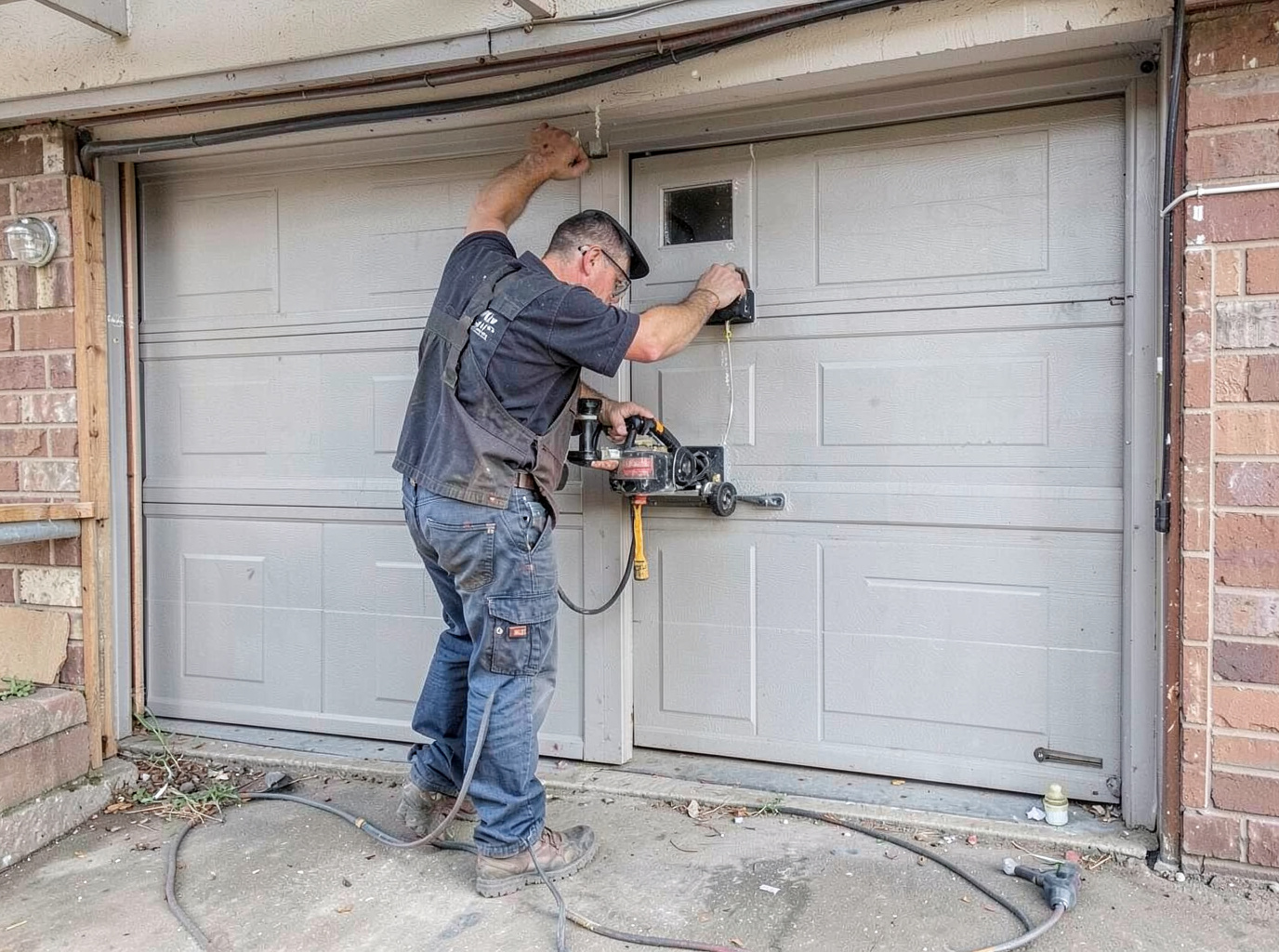
If your garage door is grinding, sitting crooked on its tracks, or refusing to close even though the sensors are clear, you need a clear answer before anyone touches a spring or a cable. Garage Door Repair Allen operates from 1026 S Greenville Ave in Allen, and we work on residential doors across the city, from older ranch homes near the Allen Event Center to newer builds off Watters Creek. Our approach is straightforward: inspect the door, explain what we found in writing, and only then begin the work you have agreed to.
Why Homeowners in Allen Choose Garage Door Repair Allen
Most garage door calls in Allen start with a door that still will not close and a lot of questions. What we try to give you is a process you can check for yourself. Before any work begins, we inspect the springs, cables, rollers, hinges, tracks, opener and safety sensors, and we write down what we see. You receive that findings sheet in plain language, showing which items are failing now, which are wearing and will need attention soon, and which are sound.
We do not replace everything because one part broke. If a roller is the only problem, we say so. If a torsion spring is nearing the end of its useful cycles but the rest of the door is in good shape, we explain why that matters and let you decide the timing. Work that was not on the written findings does not get added without a conversation first.
When parts are replaced, we lay the old and new components side by side so you can see the difference in wear, thickness and fit. Most homeowners have never looked closely at their own door hardware, and that walk-through tends to answer questions before they are asked.
We focus on residential doors in and around Allen, so we know the subdivisions, the hardware typically installed in homes of different eras, and how North Texas heat and soil affect a door over time. Our goal is to leave you with a door you understand, not just one that works today.
Why Now Is the Right Time to Look at Your Garage Door in Allen
North Texas doors work harder than many homeowners realize. Summer afternoons can push the air inside an attached garage well past comfortable temperatures. That heat thins the lubricant in rollers and hinges, and the steel expands and contracts every day, which slowly loosens brackets and wears the track. Once winter temperatures drop, moisture that has settled into the tracks can ice up, so a door that moved smoothly in October may bind by January.
Spring brings a different problem. Severe storms rattle panels and knock sections out of alignment, and hail season across Collin County is a good reason to check panels and weatherseals after a storm passes. Damage that looks cosmetic can still change how the door tracks.
Waiting follows a predictable pattern. A small squeak becomes a worn roller. A roller that fails while the door is closed puts strain on the cable drum and the opener, and a simple adjustment turns into a multi-part repair. A spring nearing the end of its life can break without warning, leaving the door far too heavy to lift by hand, which is why it is safer to address it while the door still behaves predictably.
Looking now, while the door still closes smoothly, gives you options. You can plan the work around your schedule, review the findings in writing, and avoid discovering a problem at 6 a.m. when you need the car out of the driveway.
How We Work on Your Garage Door
Every visit follows the same sequence so you always know where things stand.
- Inspection. We check the door in its current state, both closed and open, looking at balance, spring condition, cable routing, roller and hinge wear, track alignment, the opener and the safety reversal system.
- Written findings. Before any part is ordered or installed, we send you a findings sheet that lists each item, its condition, and what it would take to address it. Anything we are unsure about is labeled as such.
- Your decision. You choose which items to proceed with. Nothing outside the written findings is added without a separate conversation.
- Parts walk-through. When replacement parts go in, we show you the removed components beside the new ones, pointing out the wear, the diameter, the mounting hardware and any differences in material.
- Final check. We test the door through several full open and close cycles, confirm the auto-reverse sensors respond correctly, and review what was done so you know what to watch for.
Common Garage Door Repairs in Allen
Every door is different, but the same handful of problems shows up again and again in Allen homes. Knowing what to expect helps you read a findings sheet with confidence.
Torsion Spring Replacement in Allen
Torsion springs carry most of the weight of a typical garage door, and they are rated for a set number of cycles. In Allen, many homes built in the 1990s and 2000s still use the original springs, which are often wound for a standard lifespan rather than heavy daily use. We look for gaps between coils, rust, stretched or cracked cones, and a door that falls or rises unevenly. When a spring is replaced, we check the balance, the cable drums and the bearing plates, because a new spring on worn hardware will not last. You will see the old spring and the new one side by side before we finish.
Cable and Drum Repair in Allen
Lift cables fray and drums can slip when they are worn or out of position. Warning signs include a door that jerks, a cable that looks loose on one side, or a drum that has moved on its shaft. We inspect the cable strands, the drum set screws, the routing through the pulleys and the end-of-cable brackets. Replacement usually means matching cable length and gauge to the door's weight, and we explain the reason for each measurement in the findings sheet, so you understand why the work is sized the way it is.
Opener and Safety Sensor Alignment in Allen
Many Allen garages use chain or belt drive openers that have been in place for a decade or more. Sensors mounted near the floor can be knocked out of alignment by a broom, a trash can or a shifting foundation. We check the sensor lenses, the wiring, the force settings and the auto-reverse function. If the opener is reversing for no clear reason, the problem is usually in the door's balance or the track, not the opener itself, and the findings sheet will say which it is.
A Common Allen Scenario: The Door That Stopped Halfway
Across many subdivisions in Allen, a garage door often starts giving trouble after a long stretch of hot summer weather followed by the first cold snap of the year. The homeowner notices the door hesitating, then rising only partway before the opener quits. It can seem like a sudden failure, but the cause is usually a combination of wear that has been building for months.
When we inspect a door like this, we start with the balance. A door that is out of balance will strain the opener and can make it stop mid-travel. We look at the torsion spring for gaps between coils and at the lift cables for fraying near the drum. The rollers are often the next stop, because older nylon rollers with worn bearings can drag and stiffen once the temperature drops, which increases the load on the whole system.
In a situation like this, the work is usually sequenced rather than dramatic. The findings sheet might list a worn spring, two stiff rollers and a sensor that needs realignment. We explain that the spring is the priority because it is carrying the door's weight, that the rollers should be replaced at the same visit so they do not wear the new spring unevenly, and that the sensor is a quick adjustment. After the homeowner approves the list, we install the parts, show the old components, and run the door through full cycles while watching the balance and the reverse function.
The outcome is a door that travels its full path smoothly in both directions. The homeowner gets a written explanation of what was wrong, what was replaced, and what to watch for in the coming seasons. Just as important, the next time a noise appears, they know what it might mean and whether it needs attention right away.
Seasonal Checks for Garage Doors in Allen
A few minutes every season can catch small issues before they become service calls. In spring, after the first storms, look at the bottom weatherseal and the top panels for dents or cracks, and watch the door operate once in each direction. In summer, listen for squealing rollers as the heat rises, and keep the garage ventilated where possible. In fall, clear leaves and debris from the tracks, and check that the sensors are clean and aligned. In winter, watch for slow movement or binding in cold mornings, and avoid forcing the door open by hand if it sticks. If anything feels different from the last time you used the door, note it and have it looked at while it is still a minor problem.
Next Step: Schedule an Inspection
If your door is showing any of the signs described above, the simplest next step is an inspection. We will look at the full system, put our findings in writing in plain language, and walk you through any replacement parts before we install them. You decide what moves forward. Visit us at 1026 S Greenville Ave in Allen, TX 75002, or reach out through the contact options on this site to set up a visit that fits your schedule.
Technician insight
In Allen, the thing that catches most people out is the torsion spring, because so many homes here were built in the 1990s and 2000s with springs wound for a standard lifespan. Homeowners often wait until the door is too heavy to lift by hand, when a simple spring check would have caught the wear months earlier. Ask us to look at it while the door still moves smoothly, and you will have more choices about timing.
The Door That Stopped Halfway in a Twin Creeks Home
The door rose only partway after a hot summer and then stalled as the first cold morning arrived. On inspection, the torsion spring showed gaps between coils, two rollers were stiff, and one sensor was out of alignment. We explained the findings in writing, replaced the spring first because it carries the door's weight, and replaced the rollers at the same visit. The homeowner received a written summary and a walk-through of the old and new parts.
Garage Door Repair Services We Offer
✓Garage Door Panel Replacement in Allen
When one or two sections are dented, cracked or warped, replacing the individual panel is often more practical than changing the whole door. We match the panel's thickness, insulation and track compatibility, then show you the old panel next to the new one before installation. Our inspection also checks the hinges and rollers at those sections, since a damaged panel often pulls on hardware around it.
✓Garage Door Maintenance in Allen
Regular maintenance keeps springs, rollers, hinges, cables and the opener working together as designed. Our visits include a full inspection, lubrication where appropriate, track and bracket checks, and a balance test. You receive a written list of what was checked and what, if anything, needs attention soon, so you can plan ahead rather than react to a failure.
How it works
- 1
Inspection
We examine the door closed and open, checking balance, springs, cables, rollers, hinges, tracks, the opener and the safety reversal sensors. Nothing is changed at this stage.
- 2
Written Findings
You receive a plain-language sheet listing each item, its condition and what addressing it would involve. Items we are unsure about are labeled clearly.
- 3
Your Decision
You choose which items to move forward with. Work outside the written findings only happens after a separate conversation with you.
- 4
Parts Walk-Through
Before we finish, we show you the removed parts beside the new ones, explaining the wear, the sizing and any differences in material or fit.
- 5
Final Test
We run the door through several full cycles, confirm the auto-reverse function, and review what was done along with what to watch for going forward.
Pricing
Every job begins with an inspection and a written findings sheet, so the scope is explained before any work is agreed to. Nothing outside that written list is added without a conversation first.