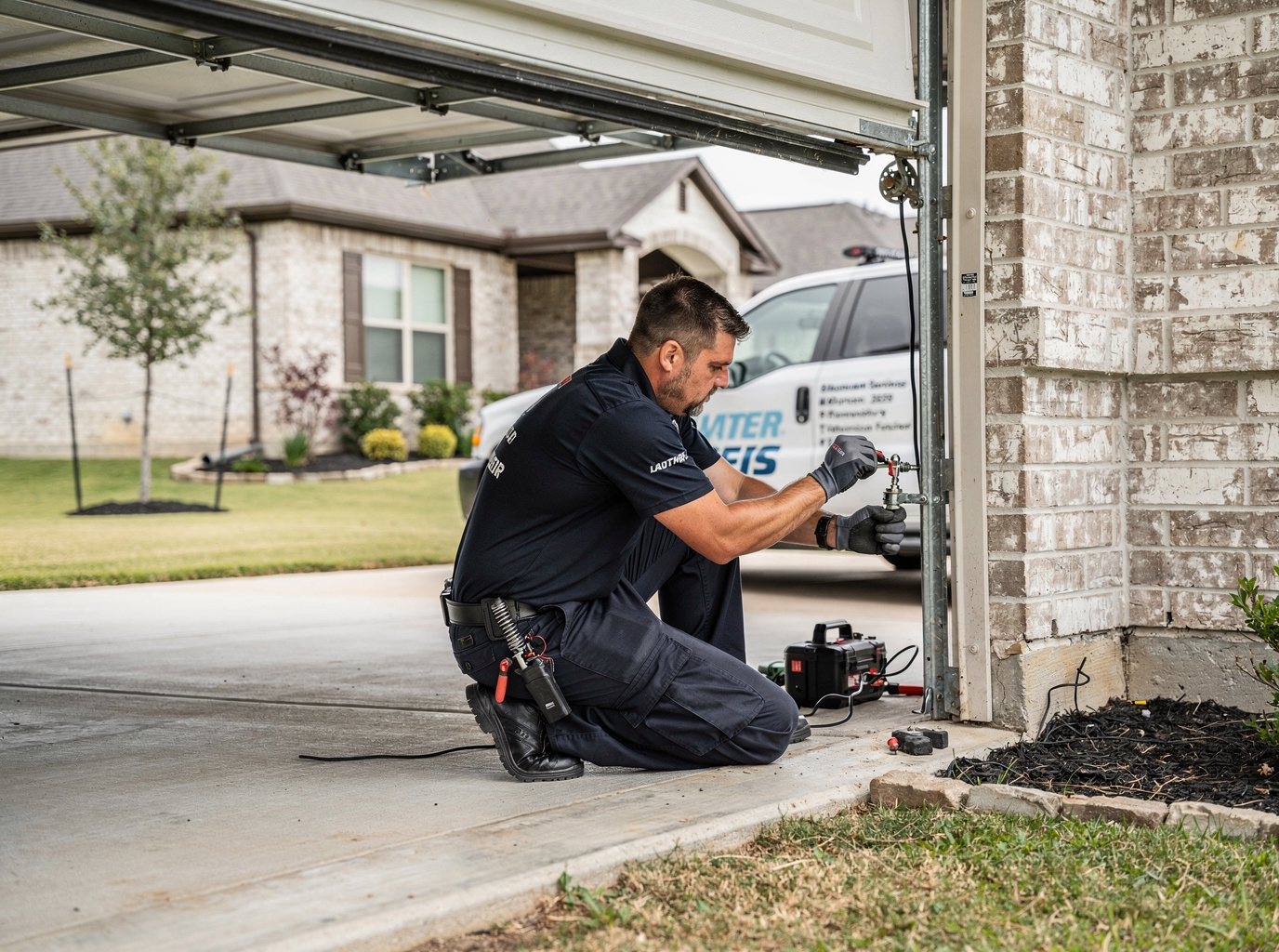
When a garage door stops halfway up, won't close, or starts grinding before dawn, you need someone who will look at the door before recommending anything. Garage Door Repair Allen works on residential doors across Allen, from older subdivisions to newer builds around Watters Creek and the neighborhoods near Chase Oaks. Every job starts with an inspection, and every finding is written down before any work begins. Our shop is at 1026 S Greenville Ave, Suite 109, so most of the neighborhoods we serve are a short drive away.
Why Choose Garage Door Repair Allen
A garage door is a heavy, spring-loaded machine that people walk under every day, so the way a repair is handled matters as much as the repair itself. We built our process around things you can check for yourself. Before we touch a spring, a cable, or a bolt, we inspect the full system: the springs, drums, cables, rollers, hinges, tracks, brackets, opener, safety sensors, and the panels. We then explain each finding in writing, so you can see what is worn, what is failing, and what is only cosmetic.
You also get to decide what happens next. If a repair makes sense, we tell you why. If the door is near the end of its useful life, we say so and explain the reasons plainly, without pressure. If one part is failing and others look marginal, you will see that in the notes instead of hearing it for the first time at the bottom of a stack of paperwork.
We also show you the old and new parts side by side when we replace anything. A worn torsion spring next to a fresh one makes the change easy to understand, and you can see the wear pattern for yourself. Workmanship that you can inspect is the standard we hold ourselves to, and the old parts are yours to look at before they leave the property.
If you are comparing options, ask us to walk you through the inspection notes, the parts, and the reasoning. Clear explanations and visible work are what we offer, and we would rather earn your confidence on a straightforward door than ask for it on a complicated one.
Why This Matters Now in Allen
Allen sits in the heart of North Texas, and the local climate is hard on garage doors in a few specific ways. Summer afternoons regularly push temperatures past 100 degrees, and the heat expands steel springs and cables while softening the lubricant that keeps rollers turning. A door that opened smoothly in May can begin to hesitate in July, and by the time the opener starts straining, the real problem has often been building for weeks.
The soil under many Allen slabs is expansive clay. As it swells after heavy rain and shrinks during dry stretches, the floor of the garage can shift slightly. That movement can pull a vertical track out of true or make a door rub along one side. Homeowners often notice a scraping sound or a gap at the top corner long before the door fails, and that early sound is worth checking rather than ignoring.
Spring and early summer bring hail and gusty thunderstorms through the region, and wind can flex a lightweight panel or bend a section track. Winter cold snaps, while milder than in northern states, still stiffen old lubricant and expose weak springs that have been holding on through the warm months. Each season leaves its own signs, and catching them early usually means a smaller, simpler repair.
If your door has been making new noises, sitting crooked when closed, or taking longer than usual to open, now is a sensible time to have it looked at. Acting on the first symptom keeps the work contained, and it gives you time to plan rather than scramble on a weekday morning when the car is stuck inside.
Our Proof: How We Do the Work Step by Step
What you see on our service visits follows a set sequence, and every step leaves a record you can read. We begin by opening the door by hand and by opener to check balance, then we look at each component in turn. The springs are checked for wear, gap, and winding condition. Cables are examined for fraying and seating on the drums. Rollers are spun and checked for flat spots and play. Hinges, bottom brackets, and track sections are measured against plumb and level, and the opener's safety reversal is tested with a standard test object.
Once the inspection is complete, we write the findings out and go over them with you before the work starts. You will see which items are failing, which are wearing, and which are fine. If replacement parts are needed, we show you the old part and the new one side by side, so the difference in condition is visible. We do not start any repair until you have read the notes and understand what the work involves.
During the repair we keep the door in balance throughout, re-check each adjustment as we go, and test the full travel of the door before we leave. Final checks include a cycle test from open and closed positions, a reversal test on the safety sensors, and a visual check of tracks and hardware. We then leave the written summary with you, so the next time someone asks what was done, the answer is on paper.
A Story From the Road: A Stuck Door After a Spring Storm
A homeowner near Chase Oaks called after a spring thunderstorm left the garage door stuck about two feet off the ground. The door would not go up or down, the opener motor hummed briefly and then stopped, and the family was using the side entrance for the week. Nothing had visibly broken, but the door had clearly been pushed hard during the storm, and the homeowner was worried the opener had burned out.
During the inspection we found that the left-side track had been knocked slightly out of line near the bottom bracket, which was pinching the roller as the door rose. The torsion spring was still intact but had a visible change in winding gap, and one bottom bracket had loosened under the stress. The opener was fine, and its motor was not the cause of the jam. We wrote up each of these findings and showed the homeowner the bent bracket and the reference marks on the track before making any changes.
We re-seated the track, replaced the loosened bracket, adjusted the spring tension to the correct balance point, and re-lubricated the rollers and hinge points. We tested the door from fully open and fully closed, checked the safety reversal, and confirmed the door sat level. The homeowner received a written summary of the work and the old bracket for reference. The door has been running quietly since, and the storm damage turned out to be a bracket and a track, not a new opener.
Common Garage Door Repairs in Allen
Most garage door calls in Allen fall into a few categories. Each one has its own telltale signs, and each one benefits from a careful inspection before anyone reaches for a tool. The three sections below cover the repairs we see most often and explain what sets each apart in our local conditions.
Torsion Spring Replacement in Allen
Torsion springs carry most of the weight of a garage door, and in Allen their working life is shortened by summer heat and frequent cycling. When a spring breaks, the door often becomes very difficult to lift by hand and may refuse to open with the opener. Replacing a spring is a precise job because the tension must match the door's weight exactly.
Here is what we check and explain in writing:
- Spring winding condition and visible gap, measured against the manufacturer's rating for the door.
- Cable drums and cable condition, since a worn cable can fail alongside a spring.
- Whether the door's weight has changed due to added panels, insulation, or hardware.
- The new spring side by side with the old one, so you can compare coil count and wear.
Replacement usually takes one visit when the parts are on hand, and the work is finished with a full balance test and a cycle check before we leave.
Opener Repair and Safety Reversal Checks in Allen
Garage door openers in Allen work hard during hot months, and their control boards, logic modules, and safety sensors can all drift out of tolerance. A door that reverses on its own, stops halfway, or ignores the remote often has a sensor alignment or wiring fault rather than a failed motor. Careful diagnosis saves unnecessary replacement.
What we look at during an opener visit includes:
- Photo-eye sensor alignment and the condition of the sensor wiring along the wall.
- Limit settings for open and closed positions, which can shift after heat cycles.
- The force setting and whether the door reverses correctly on contact with the test object.
- Remote, keypad, and wall control signal checks, with a written note on which device is at fault.
We explain each finding before any adjustment or replacement, and we show you any worn part removed from the opener.
Track and Roller Alignment in Allen
The clay soil common in many Allen neighborhoods can move a garage floor enough to shift a track out of plumb. Over time this shows up as a door that rubs one side, makes grinding noises, or sits crooked when closed. Track work is often overlooked, but it is one of the most common sources of persistent noise and uneven operation.
On a track and roller visit, we typically:
- Measure each vertical and horizontal track section for plumb and level with a reference.
- Check the rollers for flat spots, play in the stems, and cracked nylon wheels.
- Tighten or reset brackets and bolts, then re-seat the track to the correct position.
- Re-lubricate the rollers and hinge points with a product suited to the door's materials, and note the work
Technician insight
In Allen, the thing that catches most people out with Emergency Garage Door Repair is the track, not the opener. The clay soil under many local slabs shifts through summer and winter, and a door that felt fine last spring can start binding after the track has been pulled a fraction of an inch out of true. Homeowners often replace the opener when the real fix is re-seating the track and checking the rollers.
Stuck Door After a Spring Storm
A homeowner near Chase Oaks found the garage door stuck about two feet off the ground after a thunderstorm, with the opener humming and then stopping. Inspection showed a bent bottom bracket and a track pulled out of line, which was pinching a roller as the door rose, while the opener itself was sound. We showed the homeowner the bent bracket and the track reference marks, then re-seated the track, replaced the bracket, and re-balanced the spring. The door ran level and smooth on the final cycle tests, and the homeowner kept the old bracket for reference.
Emergency Garage Door Repair Services We Offer
✓Garage Door Panel Replacement in Allen
Panels can crack, dent, or separate after storm impacts, a stray vehicle bump, or long-term weathering. Garage Door Repair Allen inspects each panel, the section joints, and the end caps to determine whether a single panel can be replaced or whether the surrounding sections are also compromised. We match the panel profile and insulation rating where possible, and we show you the damaged panel next to the replacement before installation. Findings are written out first, so you know exactly which p
✓Garage Door Maintenance in Allen
Routine maintenance keeps springs, rollers, hinges, cables, and tracks working together as they should. Our maintenance visit begins with a full inspection, followed by lubrication where the manufacturer recommends it, checks of balance and safety reversal, and tightening of loose hardware. We record the condition of each component in writing so you can track changes from one visit to the next. Maintenance is a practical way to catch wear early in Allen's hot summers and clay-soil seasons.
How it works
- 1
Initial Inspection
We open and close the door by hand and by opener, then check each component including springs, cables, rollers, hinges, tracks, brackets, and safety sensors. Nothing is changed at this stage.
- 2
Written Findings
Every finding is written out in plain language, noting what is failing, what is wearing, and what is in good condition. We go over the notes with you before any work starts.
- 3
Old and New Parts Walk-Through
When a part needs replacing, we show you the old component side by side with the new one, so the difference in wear and fit is clear. You can keep the removed part for reference.
- 4
Repair and Adjustment
We complete the agreed work, re-check balance and alignment as we go, and make adjustments in small steps so each change can be verified before moving on.
- 5
Final Testing and Summary
We run full travel tests from open and closed positions, confirm the safety reversal, and check hardware. You receive a written summary of the work performed and the tests completed.
Pricing
Every visit begins with an inspection and written findings, so you see what is needed before you decide how to proceed.