2026-11-27 ·
Garage Door Won't Close? A Homeowner's Troubleshooting Guide for Allen Households
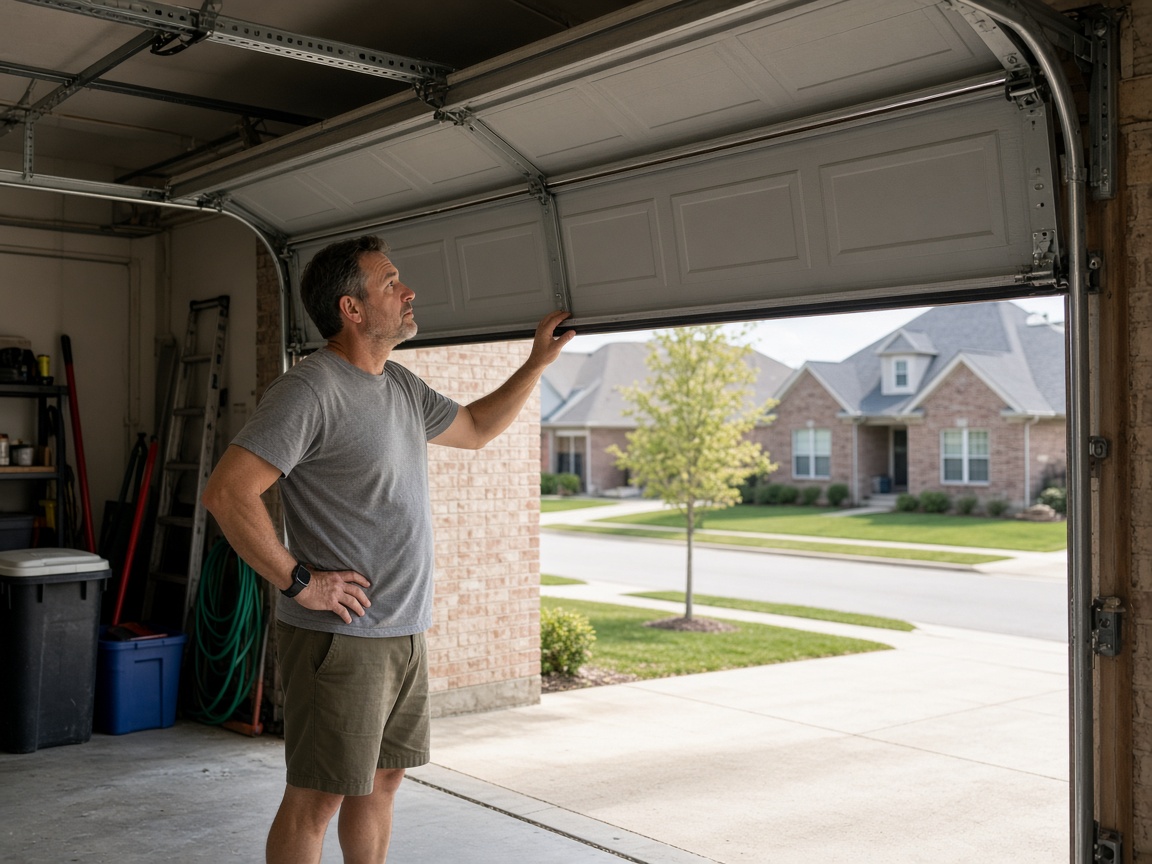
When a garage door won't close, the cause is usually one of four things: a safety sensor that can't see its beam, an obstruction on the track, a control sending the wrong signal, or a spring or cable that no longer balances the door. Safety sensors are the most common culprit and the quickest to check, so work through the steps below in order. Most homeowners can rule out the first three in under 20 minutes without tools.
Start With the Safety Sensors
Every modern garage door opener has two photo-eye sensors mounted near the bottom of the door tracks, one on each side. They project an invisible infrared beam across the opening, and if that beam is broken while the door is closing, the door reverses automatically. Standard installation places the sensors no more than 6 inches above the floor, so check that both units are at roughly the same height and facing each other.
Look for the small indicator light on each sensor. A steady light on both usually means the beam is connected. If one light is off or blinking, loosen the wing nut, realign the sensor so it points straight at the other unit, and tighten it again. Wipe the lenses with a dry cloth, since spider webs and dust in a Texas garage can block enough light to stop the door. Also check that the sensor wires haven't been pulled loose or chewed by pests, because a damaged wire can mimic a misalignment.
Clear the Door's Path
Once the sensors look right, walk the full length of the door's travel path. Garage clutter is a frequent reason a door stops and reverses: a bike handlebar leaning into the track, a storage bin on the floor near the sensor beam, or a rolled rug that has crept into the threshold. Anything that sits within the door's swing or the sensor line can trigger the safety reverse even when nothing is touching the door.
Watch the door move slowly with the opener's manual control or with the wall button held down. Listen for scraping or rubbing at the track. Look at the bottom seal and the rollers as well. A roller that has popped out of its track, or a track section knocked slightly out of alignment, will cause the door to bind partway down. If you see either, stop operating the door, since forcing it can bend the track further. Keep the area around the bottom of the door clear so the sensors and rollers have room to work.
Test the Opener and Remote Controls
If the door closes when you press the wall button but not the remote, the problem is in the transmitter. Replace the remote's battery first, then stand close to the opener and press the button again. If the door responds at close range but not from the driveway, the remote may need to be reprogrammed or the opener's antenna wire may have been moved or damaged. Many Allen households have a second remote or keypad that has fallen out of sync, so test each one individually.
Next, check the wall control and its wiring. A wall button that sticks, or a light that flickers when you press it, points to a control issue. Also confirm that the opener's internal safety reverse isn't triggered by a stuck button. If the opener runs but the door doesn't move, or it starts and stops, the problem may be in the drive mechanism or the limit settings. Those adjustments are best handled by a technician with the right tools, and a dedicated page on garage door opener services covers those repairs in detail.
Look for Signs of Worn Springs or Cables
Springs do most of the lifting work, so a weakened spring can make a door feel heavy and cause it to stall or drop unevenly while closing. Warning signs include a door that closes partway and stops, a visible gap at the top of the door, a door that slams down on its own, or a loud bang from the spring area. A broken spring usually sounds like a gunshot and leaves the door sitting too heavily or not moving at all.
Never attempt to adjust, loosen, or remove a spring yourself. Those springs are under very high tension and can cause serious injury. If you notice any of these signs, keep the door closed and avoid using the opener until a professional has inspected it. Springs can wear out after years of daily use, and North Texas heat accelerates that wear. For more on how heat affects door performance, read about why garage doors get stuck during Allen's summer heat, and if the springs need attention, spring repair and replacement is the right next step.
Know When to Call for Help
Most closing problems come down to sensor alignment, a blocked track, or a remote that needs attention, and you can often fix those yourself. Call for service if the door reverses even after the sensors are aligned and the path is clear, if you hear grinding or snapping, or if the door is off its tracks. Those conditions can worsen quickly and create a risk to people and vehicles beneath the door.
When you do call, describe what you already checked. Note whether the sensor lights were on, whether the door responded to the wall button, and whether you heard any unusual noise. That information helps a technician diagnose the problem faster. A general garage door repair visit can address the full door system, so the opener, springs, and tracks get checked together rather than one at a time.