2026-11-27 ·
Signs Your Garage Door Springs Are Wearing Out in Allen
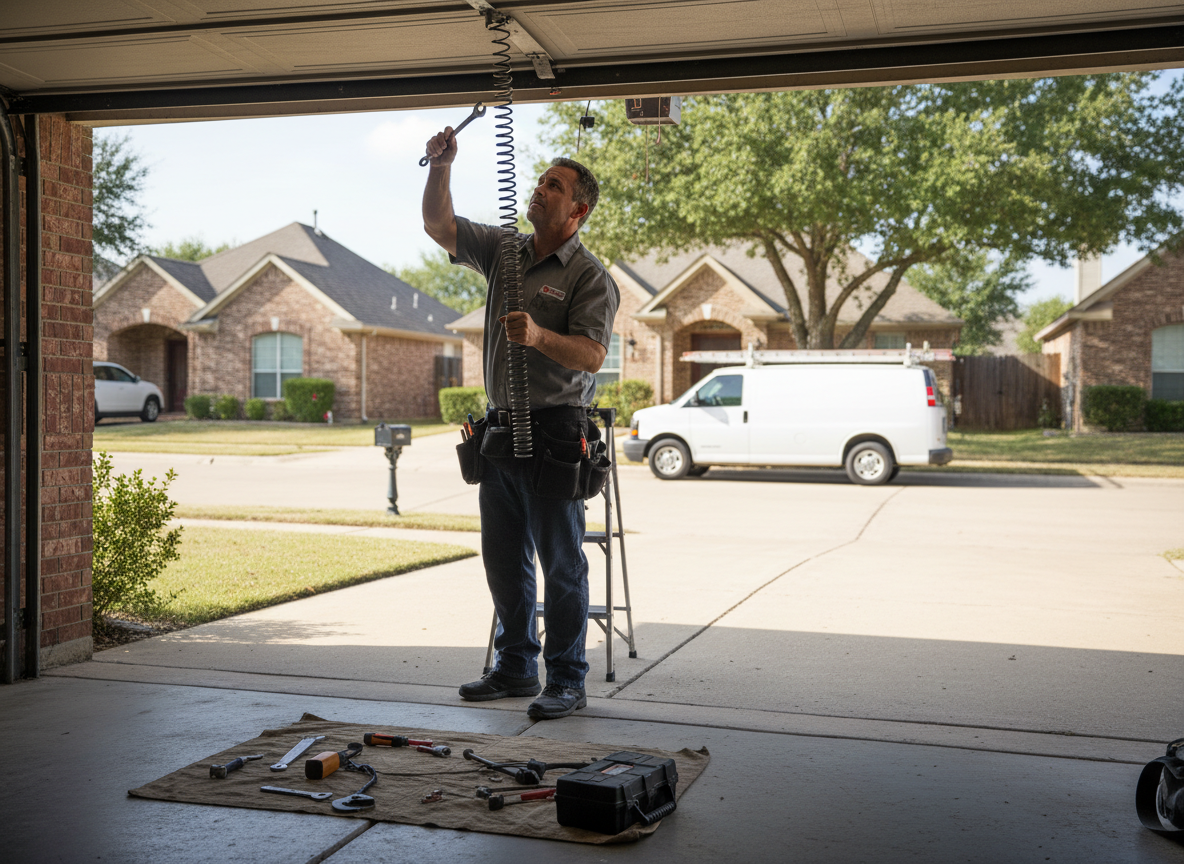
A garage door spring rarely fails without warning. In Allen, the combination of summer heat, spring storms, and daily use wears springs down over time, and the door usually gives a few clear signs before a spring breaks. Here are the signs to look for, and what an inspection covers when you spot them.
A Visible Gap in the Coil
A torsion spring should sit as one continuous coil along the shaft above the door. When a spring breaks, a gap opens in the coil, usually a few inches wide, and the two ends pull apart. You can often see the gap from the floor of the garage if you look up at the shaft. An extension spring shows the same kind of break along the horizontal track on each side of the door. A visible gap means the spring is no longer carrying its share of the door's weight, and the door should not be operated until it has been inspected.
Rust and Corrosion
North Texas humidity and spring storms bring moisture into the garage, and moisture brings rust. Rust on a spring coil is more than a cosmetic problem: it eats into the steel and creates weak points where the coil can snap under tension. Look for orange or brown flaking on the coils, especially near the ends where the spring meets the cone or the cable drum. If the rust has spread across a stretch of the coil, the spring is wearing out and should be inspected before it fails.
A Door That Feels Heavy or Lifts Unevenly
A balanced door should lift smoothly by hand with even resistance from bottom to top. When a spring weakens, the door feels heavier on one side, rises unevenly, or drifts back down when you let go. You may notice one side of the door moving a little faster than the other, or the door sitting slightly crooked as it travels. These are signs that one spring is carrying more load than the other, and the surviving spring is wearing faster because of it.
A Loud Bang from the Garage
A loud bang from the garage, often in the middle of the night, is one of the most common signs of a broken torsion spring. The sound comes from the coil snapping under tension, and it can be loud enough to wake the household. After the bang, the door usually will not lift at all, or it lifts only a few inches before stopping. If you hear that sound, do not keep trying the opener — the door is too heavy for the opener to lift on its own, and running it can strain the motor and the drive.
The Opener Straining
When a spring weakens, the opener has to work harder to lift the door, and the strain shows. The opener may grind, hesitate, or reverse partway through its travel. The remote may work on the second or third press but not the first. The door may stop a few inches short of fully open, or the opener may hum without moving the door at all. These symptoms often look like an opener problem, but the real fault is usually the spring. An inspection checks the balance first, because that is where the fault usually sits.
A Sagging or Crooked Door
A door that sags or sits crooked when closed is another sign of spring wear. When the springs on each side are no longer matched, one side of the door drops lower than the other, and the panels can bind against the track. You may see a gap at the bottom of the door on one side, or the door may catch as it moves through the track. A crooked door puts extra strain on the rollers, hinges, and track, so it is worth having it inspected before the wear spreads to the rest of the system.
Why Worn Springs Should Not Be Ignored
A worn spring is not just an inconvenience. Springs carry most of the door's weight, and when one fails, the full load falls on the opener, the cables, and the remaining spring. A door that drops suddenly can damage the panels, the track, and anything in its path, and a cable under strain can come off its drum. Catching a worn spring early keeps the repair to the spring itself, rather than the spring and everything it pulled down with it.
What an Inspection Covers
An inspection starts with the door's balance. With the opener disconnected, we check whether the door stays put at mid-height, which tells us whether the springs are still carrying the load evenly. We look at the coils for gaps and rust, check the cables and drums for fraying and wear, and test the rollers, hinges, and tracks for binding. We also check the opener's safety reversal and travel limits, since a worn spring changes how the opener behaves. The findings are written out and explained before any work begins, and we show you the worn parts next to the new ones so you can see what failed and why.
If you have noticed any of these signs in your Allen garage, the next step is an inspection. Read more about spring repair and replacement and what it covers, or contact us to arrange a visit.